Utility bill verification plays an important role in many Know Your Customer, or KYC, workflows across Nigeria. While government issued identity documents verify who a customer is, utility bills are commonly used to help verify where that customer lives.
Banks, fintech companies, insurance providers, lending platforms, investment apps, and enterprise onboarding systems often request utility bills as part of address verification.
Unlike passports or driver's licences, however, utility bills are not standardized. Different providers use different layouts, fonts, logos, and formatting. This makes utility bill verification considerably more challenging than many developers expect.
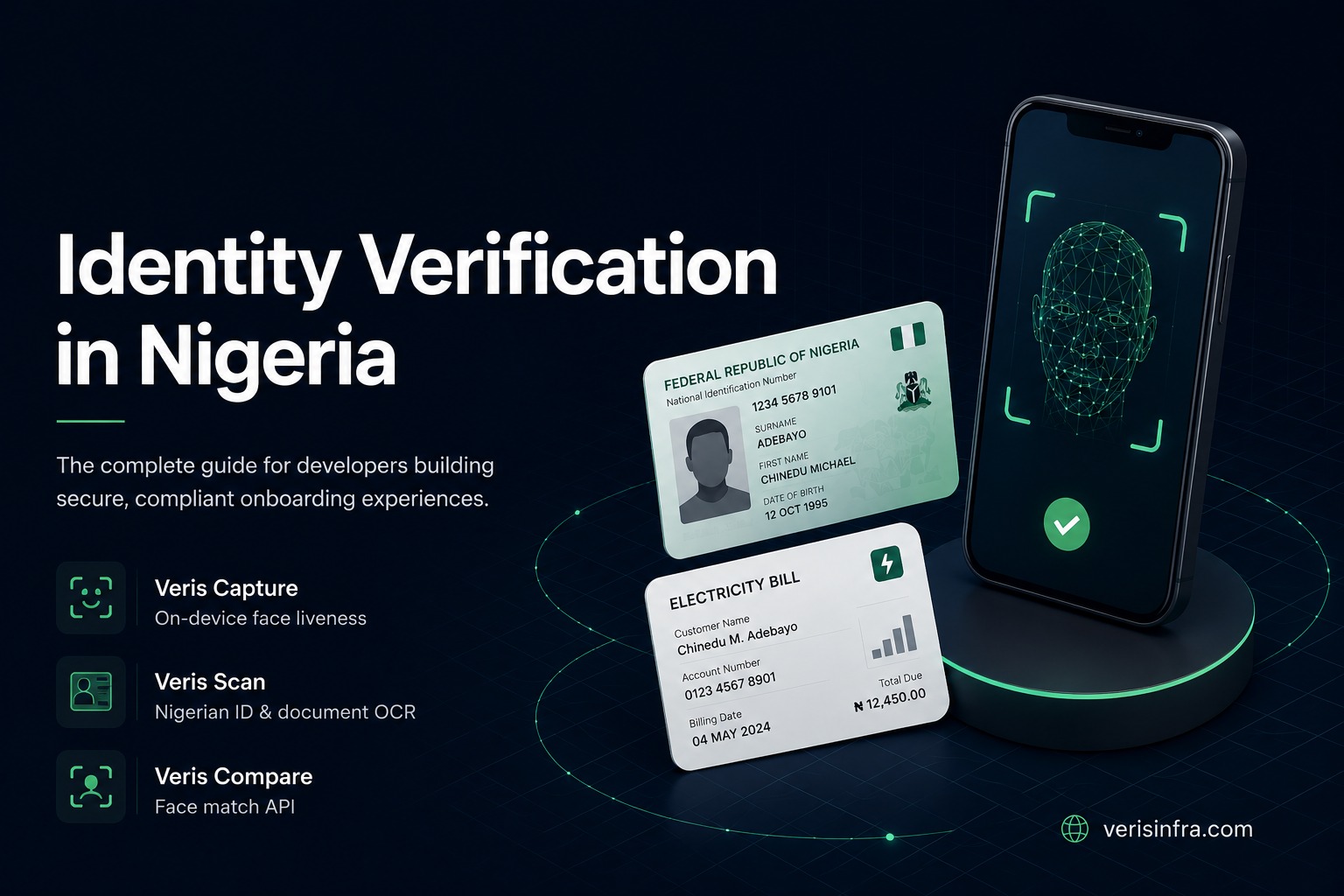
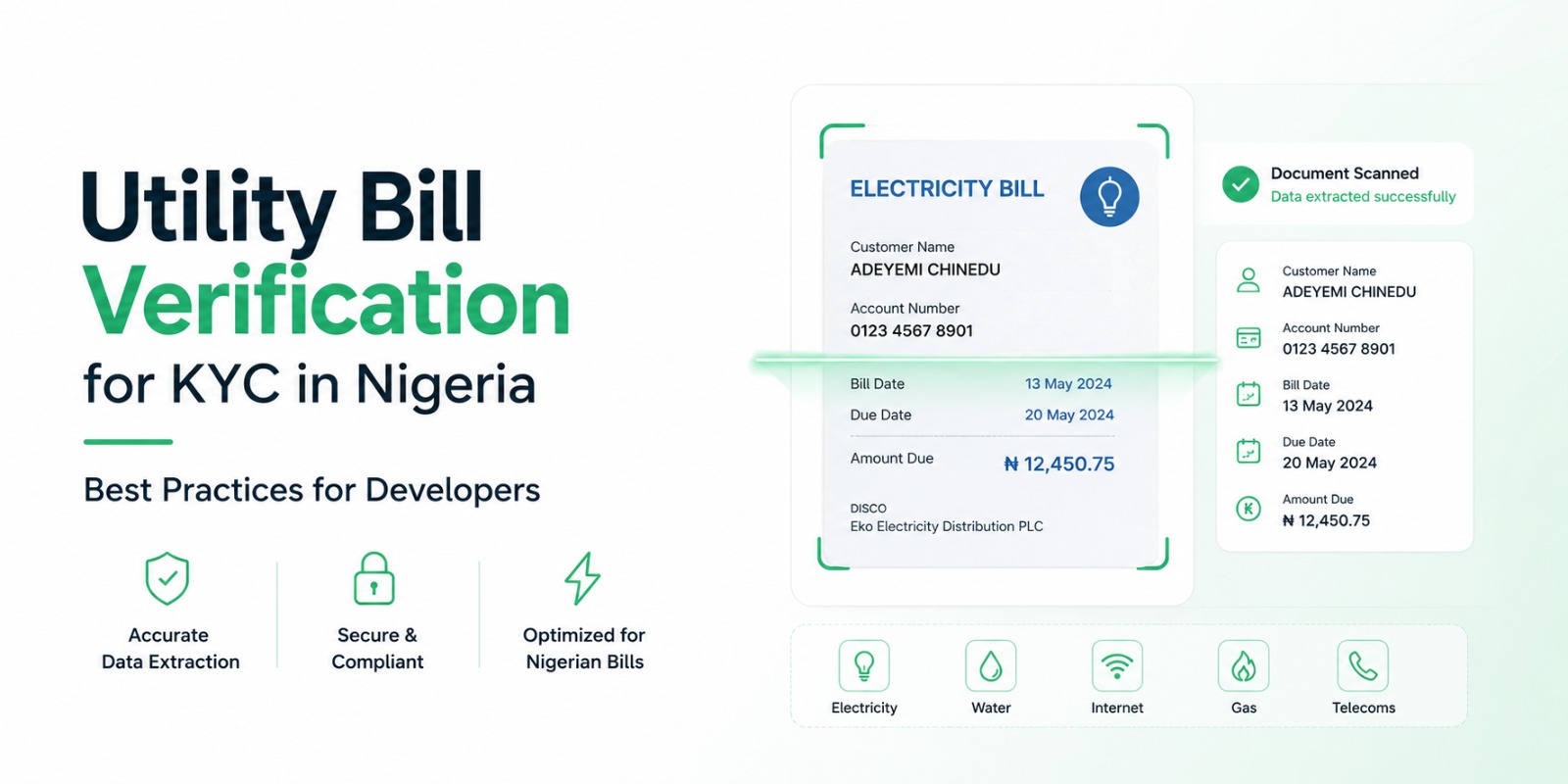
At Veris, Veris Scan is designed to extract structured information from Nigerian utility bills alongside government identity documents. Through Veris, developers can combine document OCR, face liveness, and face matching using a single API key while following a privacy first architecture where no biometric data is ever stored.
Why Utility Bills Matter
Many regulated industries require proof of address before granting access to products or services.
Utility bills can help verify that a customer lives at the address they have provided during registration.
Common use cases include:
Digital banking
Loan applications
Investment accounts
Insurance onboarding
Corporate account creation
Cryptocurrency exchanges
Enterprise customer verification
Address verification helps reduce fraud and improves confidence in customer identity.
What Counts as a Utility Bill?
Utility bill OCR for address verification
Organizations define acceptable documents differently.
Examples commonly accepted during onboarding include:
Electricity bills
Water bills
Waste management bills
Bank statements
Veris Scan supports these document types today. Some organizations also accept official government correspondence as supporting proof of address, subject to your own business rules.
Business rules should clearly define which document types are supported.
Why Utility Bills Are Difficult to Process
Unlike national identity cards, utility bills have no single standard.
Developers often encounter:
Different page layouts
Multiple font styles
Company specific branding
Varying paper quality
Folded documents
Low quality photographs
Shadows
Camera blur
Cropped images
A generic OCR engine may extract text successfully but still fail to identify the fields that matter most.
What Information Should Be Extracted?
The goal is not to capture every piece of text on the document.
Instead, applications should focus on information relevant to verification.
Common fields include:
Customer name
Service address
Billing address
Utility provider
Account number
Billing date
Statement date
Extracted information should then be validated against the onboarding data provided by the customer.
OCR Is Only the First Step
Many teams assume OCR completes document verification.
In reality, OCR simply converts visible text into machine readable information.
A stronger verification workflow includes:
Image quality assessment
OCR extraction
Address validation
Date validation
Business rule evaluation
Identity verification
Fraud checks
Each layer improves confidence in the final onboarding decision.
Learn more about Veris Scan at /scan.
Designing a Better Capture Experience
Capture quality has a direct impact on OCR accuracy.
Help users submit better images by providing simple guidance.
Examples include:
Place the document on a flat surface
Capture the entire page
Avoid reflections
Improve lighting
Hold the camera steady
Keep text clearly visible
Real time feedback reduces failed uploads and minimizes frustration.
Combining Utility Bills with Identity Verification
A utility bill confirms an address.
It does not verify identity on its own.
A complete onboarding process should combine multiple verification steps.
A recommended workflow is:
Verify that a real person is present using Veris Capture
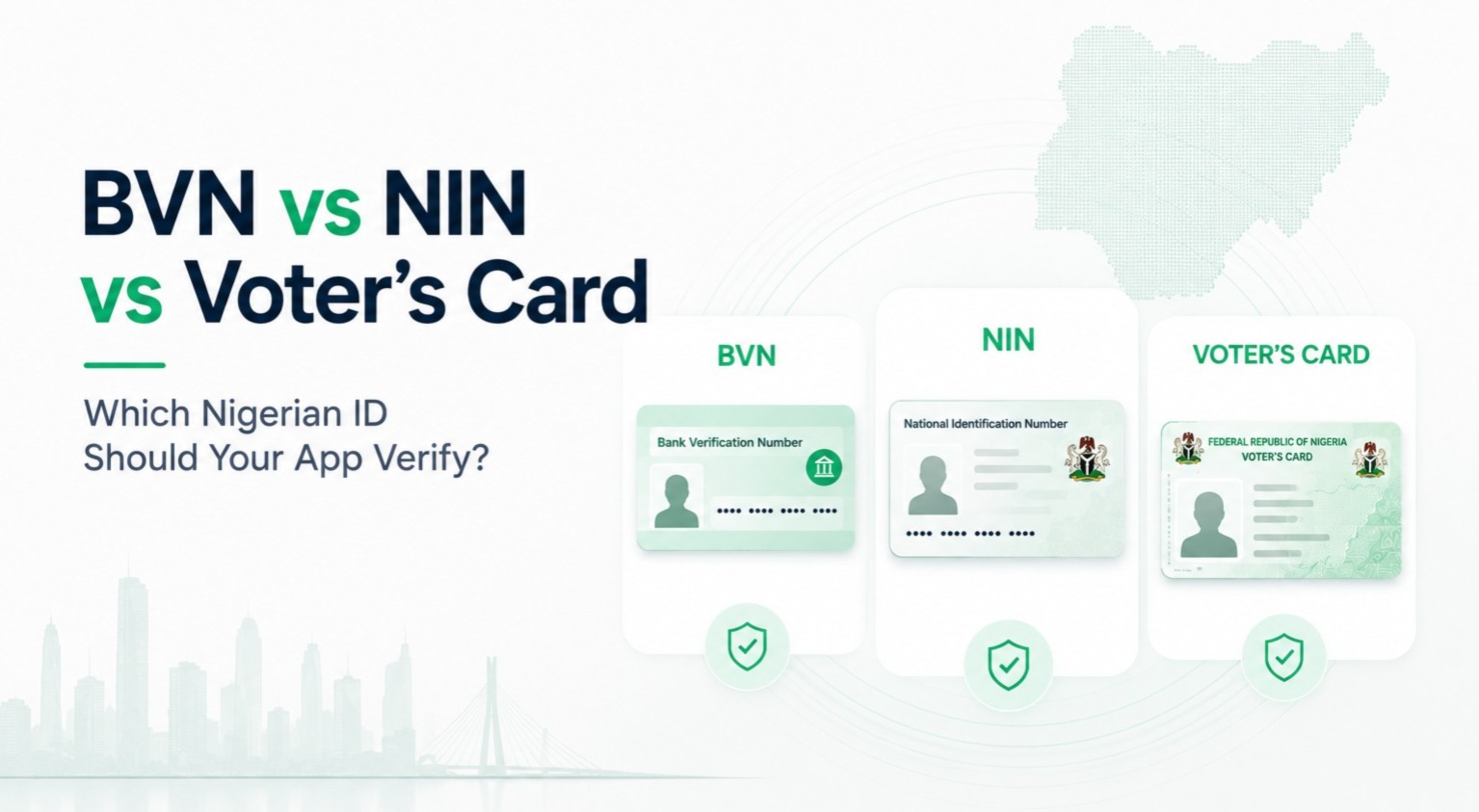
Scan the government identity document with Veris Scan
Scan the utility bill using Veris Scan
Extract structured information
Compare the live face with the identity document using Veris Compare
Evaluate business rules
Complete onboarding
Using multiple verification layers provides stronger protection against fraud than relying on any single document.
Building for Nigerian Users
Developers building products for Nigerian customers should expect significant variation in document quality.
Real world conditions often include:
Low light environments
Entry level Android phones
Slow network connections
Older cameras
Creased paper documents
Compressed images
Engineers at Veris Labs continuously evaluate OCR performance under these conditions so that developers can build products for real users rather than ideal test environments.
Privacy First Architecture
Utility bills contain sensitive personal information.
Applications should collect only the information required for verification.
Veris follows several important principles.
Face liveness happens on device
No biometric templates are stored
Verification requests are encrypted
Developers control business decisions
Systems collect only the information required for verification
This architecture reduces unnecessary data exposure while supporting secure onboarding.
NDPR Considerations
Applications processing utility bills should align with NDPR principles.
Good implementation practices include:
Request documents only when necessary
Clearly explain why the document is required
Protect uploaded information
Restrict access to sensitive records
Define retention policies
Maintain appropriate audit logs
Privacy should be considered throughout the entire verification process.
Common Developer Mistakes
Utility bill verification projects often become unreliable because of avoidable implementation choices.
Watch for these issues:
Accepting unreadable images
Ignoring image quality assessment
Assuming OCR guarantees accuracy
Failing to validate extracted addresses
Using utility bills without identity verification
Retaining documents longer than necessary
Good architecture reduces both fraud and operational complexity.
Why Developers Choose Veris
Developers choose Veris Scan because it is designed for Nigerian identity verification rather than generic document OCR.
Integrated through Veris, it works alongside Veris Capture and Veris Compare to provide a complete identity verification platform.
Research at Veris Labs continues to improve OCR accuracy, document handling, and onboarding performance across African markets.
Key Takeaways
Utility bill verification is an important component of many KYC workflows, but it should never be treated as a standalone verification method.
A strong implementation combines:
Image quality assessment
OCR
Address validation
Government identity verification
Face liveness
Face matching
Privacy first architecture
By combining all three Veris products, developers can build secure onboarding experiences that balance fraud prevention, compliance, and user experience.
Across every Veris product, one design principle remains unchanged.
No biometric data is ever stored.
Frequently asked questions
Which utility documents can Veris read for address verification?
Electricity, water, and waste bills, as well as bank statements.
What fields are extracted from a bill?
Account name, service address, account or meter number, distributor, date, and amount, returned as structured data.
Does address verification require an image upload?
No. Extraction runs on-device and you receive only the structured fields, so no document image leaves the device to Veris.