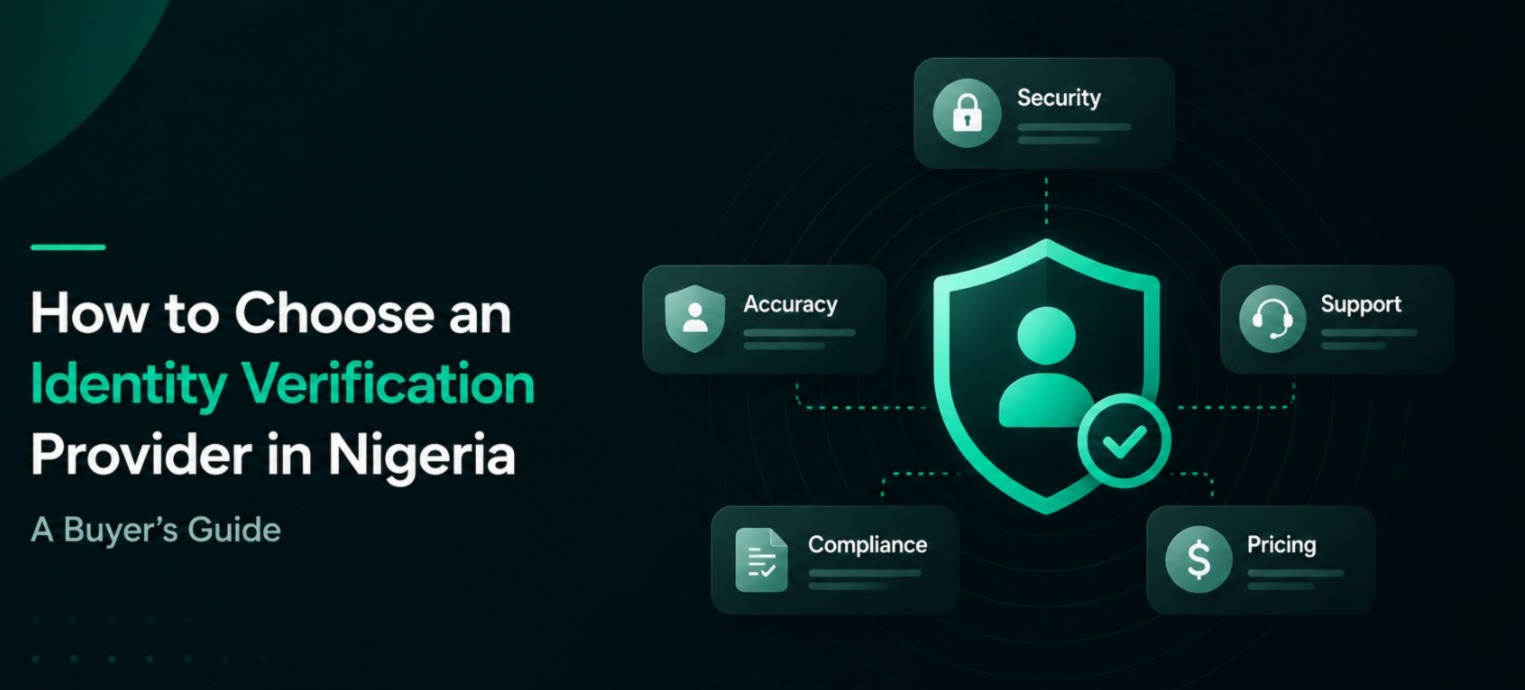
Choosing an identity verification provider is one of the highest-stakes decisions a Nigerian fintech makes. Get it right and onboarding is fast, compliant, and cheap to run. Get it wrong and you inherit fraud, churn, surprise bills, and a painful migration later.
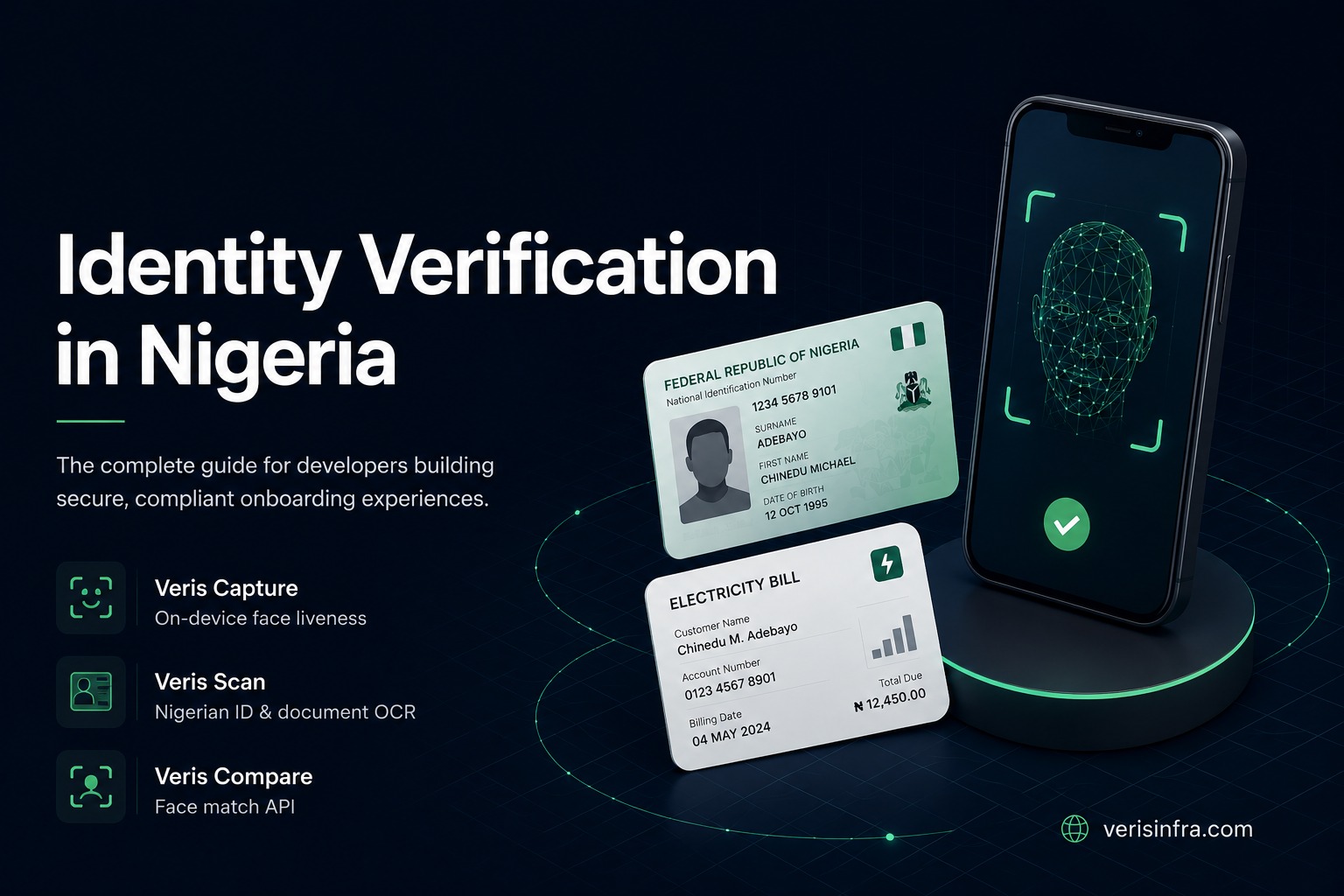
This is a vendor-neutral framework for evaluating providers on what actually matters - not marketing claims. Where relevant, we note how Veris approaches each criterion through Veris Capture, Veris Scan, and Veris Compare, on one principle: no biometric data is ever stored.
Start With What You Actually Need
Before comparing vendors, write down your real requirements:
Which CBN tiers do you need to support?
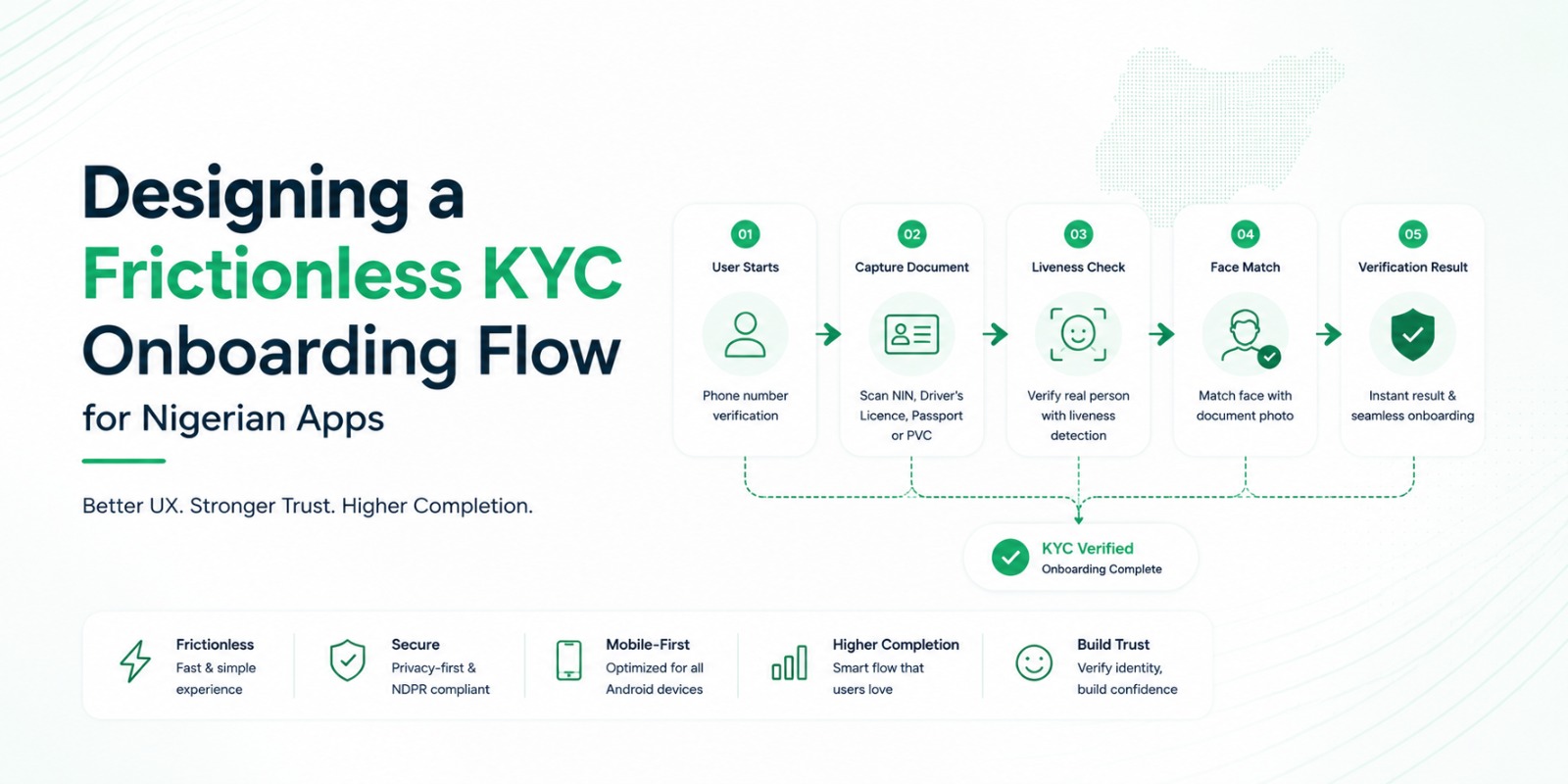
Do you need database lookups (BVN/NIN), biometric verification (liveness, face match), document OCR, or all three?
Do you need KYB (business verification) and AML screening, or just individual KYC?
What platforms - Android, iOS, Flutter, React Native, web?
What's your 12-month volume?
Many teams buy a heavyweight all-in-one platform when they needed a focused capture layer, or vice versa. Clarity here prevents overpaying.
The Criteria That Actually Matter
1. Performance on Real Nigerian Devices
The demo always looks good on a flagship. Ask for performance on entry-level Android phones, poor lighting, and slow networks - that's what your users have. A provider that only works on premium hardware will quietly wreck your Tier 1 conversion.
2. Anti-Spoofing and Liveness Quality
Face matching without strong liveness is easy to defeat with a photo or replay. Ask what presentation-attack detection the provider does, whether liveness runs on-device (better privacy and latency), and how it handles printed photos, screen replays, and deepfakes.
3. Document Coverage for Nigeria
Confirm real support for the documents your users hold: NIN Slip, National ID Card (NIMC), Driver's Licence, International Passport, Voter's Card, and address documents like utility bills and bank statements. Generic global OCR often struggles with Nigerian layouts.
4. Pricing Model
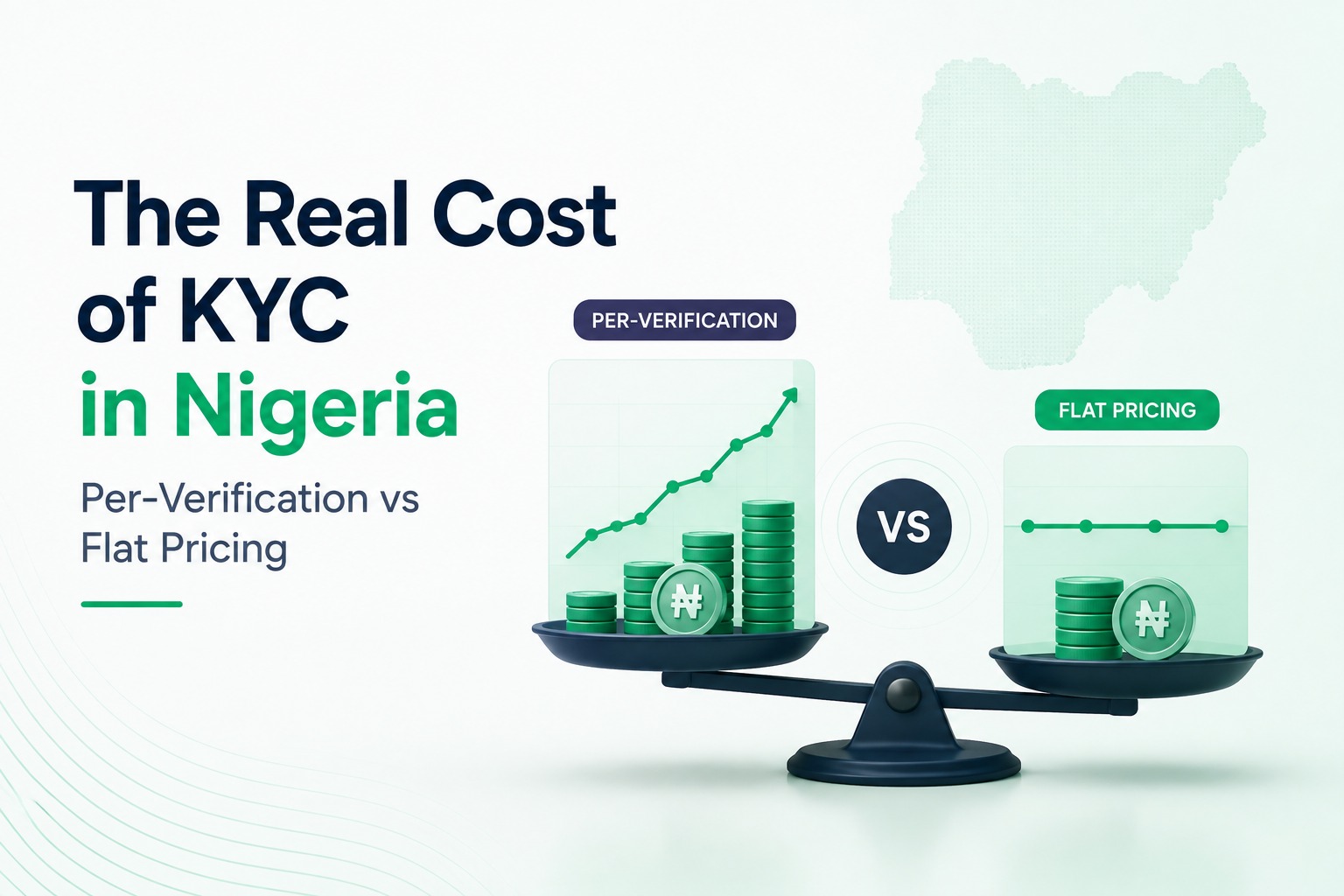
Understand whether you pay per verification or a flat/feature-based fee, how retries are billed, and what overage looks like. Model cost per successful onboarding at projected volume, not the headline per-check price.
5. Privacy and Data Handling
Ask the uncomfortable question: does the provider store biometric data? Storing face templates creates breach risk and complicates NDPR. Prefer providers that minimise or never store biometrics and keep you in control of the decision.
6. Compliance Posture
Check alignment with NDPR and the CBN's automated-verification expectations, and ask about certifications and audit logging. Even where a provider is early on formal certification, they should have a clear security story you can evaluate.
7. Developer Experience
You'll live with this integration for years. Evaluate SDK quality across your platforms, docs, a real sandbox, one API key vs many, and support responsiveness. A clean integration saves more than any per-check discount.
8. Coverage vs Focus
Decide whether you want a broad all-in-one (lookups + AML + KYB + biometrics) or a focused best-in-class layer you compose with your own lookups. Both are valid - the wrong fit for your stage is the expensive mistake.
Questions to Ask Every Vendor
Can I test on a real low-end Android device in a free sandbox?
Does liveness run on-device, and what attacks does it stop?
Which exact Nigerian documents do you support, and how accurate on real phone captures?
Is pricing per-verification or flat, and how are retries and overage billed?
Do you store biometric data? For how long? Where?
How do you help me meet CBN tier and NDPR requirements?
What's your uptime, and how do you handle incidents?
Where Veris Fits
Veris is a focused capture layer - on-device liveness, Nigerian document OCR, and face matching - behind one API key, with flat pricing and no biometric storage. It's designed to pair with your BVN/NIN lookups rather than replace them. If you need a single all-in-one platform that also does government lookups, AML, and KYB, weigh that against the control and privacy benefits of composing a focused layer with your own checks.
Frequently asked questions
What's the most important thing to test before choosing a provider?
Performance on a real entry-level Android phone in poor conditions, using the provider's free sandbox. Most verification failures in Nigeria come from device and network reality, not algorithm quality - so this predicts your actual conversion better than any datasheet.
Should I pick an all-in-one platform or a focused layer?
It depends on your needs. All-in-one platforms bundle lookups, AML, KYB, and biometrics but cost more and store more of your data. A focused layer (like Veris for capture/OCR/matching) gives more control, better privacy, and often lower cost, but you compose it with your own database lookups. Match the choice to your stage and volume.
How do I know if a provider is CBN and NDPR aligned?
Ask directly how they support the CBN's tiered, automated-verification requirements and NDPR principles (consent, minimisation, retention, access control, audit logs), and whether they store biometric data. A credible provider answers specifically rather than with generic "we're compliant" claims.
Does Veris store biometric data?
No. Liveness runs on-device and no biometric templates are stored, which reduces breach risk and simplifies NDPR alignment.
Key Takeaways
Start from your real requirements, then evaluate providers on performance on real Nigerian devices, liveness quality, document coverage, pricing model, privacy, compliance posture, and developer experience. Test in a sandbox on a cheap phone before you commit, and decide deliberately between an all-in-one platform and a focused layer.
Veris offers the focused capture layer - Veris Capture, Veris Scan, and Veris Compare - and across every product: no biometric data is ever stored.
Related Veris Resources
Veris Capture - on-device face liveness
Veris Scan - Nigerian document OCR
Veris Compare - 1:1 face matching API